Postures
Benefits, Purpose, and the Wisdom Behind the Practice
The sequence practiced at Bikram Yoga El Cerrito has been refined over more than a century. Its roots trace through Paramahansa Yogananda's youngest brother, Bishnu Ghosh, who established his College of Physical Education in Calcutta in 1923. Ghosh was the first to systematically document yoga's ability to heal the body, working one-on-one with students to prescribe specific postures for specific conditions. He believed yoga was not merely a spiritual discipline but a precise physiological tool — a view far ahead of its time that modern science has since gone a long way toward validating.
Ghosh's student Bikram Choudhury brought this lineage to the West in the early 1970s, and together with Rajashree Choudhury — a five-time Indian National Yoga Champion with a degree in yoga therapy — refined and codified the 26+2 sequence taught in studios around the world today. The ordering of the postures is not arbitrary. Each one prepares the body for the next. The series works systematically from the outside in — warming the muscles first, then the joints, then compressing and stretching the organs, the glands, and the nervous system. By the end of a class, every system in the body has been addressed.
What follows is a detailed exploration of the first postures in the series.
Pranayama | Standing Deep Breathing
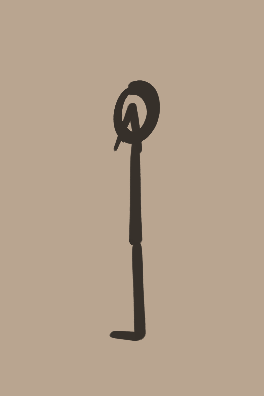
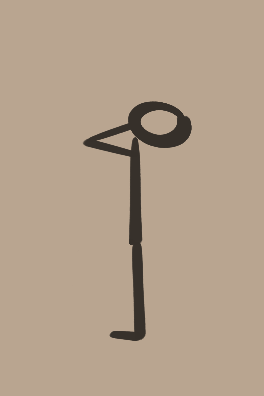
The class begins not with movement but with breath. This is deliberate. Before the body is asked to do anything demanding, the respiratory system is primed, the nervous system is settled, and the mind is brought into the room.
Pranayama — from the Sanskrit prana (life force) and ayama (extension or control) — describes the conscious regulation of breath. In the 26+2 sequence, it takes the form of a slow, full inhalation through the nose with all ten fingers interlocked under the chin, elbows extending upwards . As the inhalation deepens over six counts, the elbows rise up toward the ceiling — the goal eventually being to bring the forearms to touch the ears. On the exhale, the head drops back, the hips press forward with the hip muscles contracted solid, the spine stays straight, and the elbows come together away from the chest, up and forward. This cycle is repeated ten times in each of two sets, and the effect on the body is immediate and measurable.
What it does to the lungs
Most people, in ordinary daily life, use only a fraction of their lung capacity. Shallow, chest-based breathing is the norm — particularly in people who spend long hours sitting, or who carry chronic stress. Over time, the lower lobes of the lungs, which contain the greatest concentration of alveoli (the tiny air sacs where oxygen and carbon dioxide are exchanged), become underutilized. Carbon dioxide accumulates. Oxygen delivery to the tissues becomes less efficient.
Pranayama reverses this. The slow, complete inhalation expands the lungs fully — from the base upward — stretching the alveoli and maximizing the surface area available for gas exchange. The forceful exhalation that follows drives out residual stale air that ordinary breathing leaves behind. Every breath in Pranayama increases the lungs' elasticity and power, opening the otherwise residual alveoli that normal breathing never reaches. Practiced consistently, this increases lung capacity, strengthens the diaphragm and intercostal muscles, and improves the efficiency of every breath taken for the rest of the day.
Regular pranayama practice has been shown to improve lung function in both healthy individuals and those with respiratory conditions. It has demonstrated particular benefit for people with chronic bronchitis, emphysema, asthma, and shortness of breath — by training the lungs to expand more fully and the respiratory muscles to work more efficiently.
What it does to the nervous system
The relationship between breath and the autonomic nervous system is one of the most well-documented areas in modern yoga research. The autonomic nervous system governs the body's involuntary functions — heart rate, blood pressure, digestion, immune response — and divides broadly into the sympathetic (fight-or-flight) and parasympathetic (rest-and-digest) branches.
Chronic stress keeps many people in a state of low-grade sympathetic activation: heart rate slightly elevated, breathing shallow and rapid, muscles subtly braced. Slow, deliberate deep breathing directly counteracts this. It stimulates the vagus nerve — the main highway of the parasympathetic nervous system — slowing the heart rate, lowering blood pressure, and signaling the body that it is safe to relax.
The six-count rhythm of Pranayama is not arbitrary. Research has found that slow deep breathing at around six breaths per minute functionally resets the autonomic nervous system through stretch-induced signals in the lung tissue that synchronize neural activity across the heart, lungs, limbic system, and cortex. In plain language: breathing slowly and fully doesn't just make you feel calmer — it measurably changes the state of your nervous system.
This is why Pranayama opens the class. It is not a formality. It is the physiological foundation on which everything else is built.
What it does to circulation and the mind
With each full inhalation, oxygen-rich blood is drawn into the lungs and distributed throughout the body. The brain, which consumes approximately 20% of the body's oxygen despite representing only 2% of its mass, is among the first to benefit. Students often report a sense of mental clarity and calm within the first few rounds — a direct consequence of improved cerebral oxygenation.
Pranayama has also been shown in multiple studies to reduce systolic blood pressure, making it a valuable practice for those managing hypertension. The deep breathing pattern activates the baroreceptors — pressure-sensitive receptors in the carotid arteries — which in turn modulate blood pressure downward.
For students dealing with insomnia, anxiety, irritability, or stress-related disorders, the calming effect of this opening exercise is often one of the first things they notice after beginning a regular practice.
2. Ardha Chandrasana | Half Moon Pose
with Pada Hastasana | Hands to Feet Pose
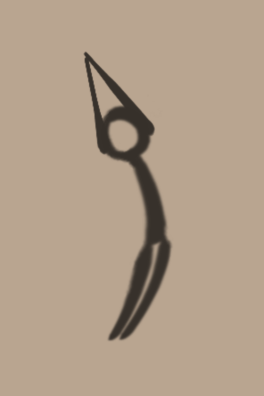
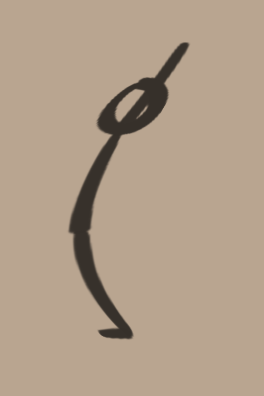
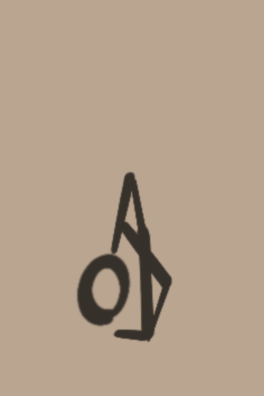
This is a four-part posture: a lateral bend to the right, a lateral bend to the left, a backbend, and a forward fold. The feet are together throughout — heels and toes touching — and the arms are overhead with fingers interlocked, index fingers released, thumbs crossed, palms pressed together, elbows locked and arms touching the ears throughout.
The side bends are the preparation. The backbend is the actual Ardha Chandrasana — the half moon, the crescent shape the body makes as the spine arches fully backward from the coccyx to the neck. Together the sequence constitutes the first complete spinal warm-up of the class, moving the spine through every plane of motion before the more demanding standing postures begin.
The lateral bends: warming the spine
The lateral bends stretch the entire side of the body from ankle to fingertip, strengthening the obliques, hips, and shoulders while beginning to warm the spinal muscles for the backbend that follows. The instruction to stretch up before bending to the side is essential — the lift creates length along the spine so the bend produces an even stretch rather than a compression or collapse. The weight shifts into the heel on the side being stretched from, the legs stay strong and straight, and the hips remain square.
The alternating compression and decompression of the sides of the spine improves the hydration and nutrition of the intervertebral discs — important because discs are avascular (they have no direct blood supply) and depend on this mechanical pumping action to receive nutrients and expel waste. Students with sciatic pain — often caused by compression along this nerve pathway — frequently find relief over time through consistent practice of this portion of the posture.
Ardha Chandrasana: the backbend
The backbend is where the posture earns its name. Done correctly, it is a total spine backbend — coccyx to neck, lower back, middle back, upper back — not a collapse into the lumbar. The hips press forward, the hip muscles contract, the legs stay straight and strong, the chest lifts, and the arms move back as far as they will go. The goal is an even arc through the whole spine, not a dramatic bend in one place.
This opening of the thoracic spine counteracts the forward rounding most people develop over years of desk work and screen time. The backbend also compresses and then releases the adrenal glands, which sit atop the kidneys — an action understood in the Ghosh tradition to support adrenal function and to be valuable for anyone dealing with chronic fatigue, stress, or hormonal dysregulation.
The muscles required to hold the backbend safely — the gluteals, the abdominals, the erector spinae — are among the most important stabilizers of the lower back. Building their engagement here prepares the body for the deeper backbends later in the series: Standing Bow, Bow Pose, and Camel.
Pada Hastasana: the forward fold
Pada Hastasana — hands to feet — completes the spinal sequence with a deep forward fold that reverses the direction of the backbend and delivers its own distinct set of benefits.
From center, the student folds forward and slides the hands under the heels, gripping from behind, and works the torso toward the thighs and the forehead toward the shins. The spine is fully flexed forward, the head hangs below the heart, and fresh blood flows to the brain. The entire posterior chain — hamstrings, calves, the sciatic nerves, and the full length of the back — is stretched under the combined influence of body weight and muscular engagement.
The compression of the abdomen against the thighs massages the digestive organs — the stomach, liver, and intestines — stimulating peristalsis and improving digestive function. Students with chronic digestive issues often notice improvement here over time.
Students with chronically tight hamstrings — which often pull the pelvis into a posterior tilt and contribute to lower back pain — find this posture one of the most transformative in the series with consistent practice.
Cumulative benefits of the sequence
Practiced regularly, the Half Moon / Pada Hastasana sequence:
- Increases flexibility and range of motion in the spine, hips, and legs
- Strengthens the obliques, abdominals, gluteals, deltoids, and trapezius
- Improves spinal health by hydrating the intervertebral discs
- Relieves sciatic pain and nerve compression in the lower body
- Stimulates and tones the digestive organs
- Improves circulation to the brain and lower extremities
- Firms and tones the waist, hips, abdomen, and thighs
- Supports adrenal and kidney function through the backbend compression
- Helps relieve menstrual discomfort and supports pelvic circulation
3. Utkatasana | Awkward Pose
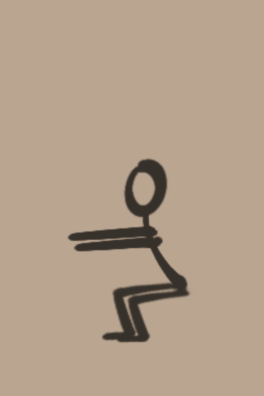
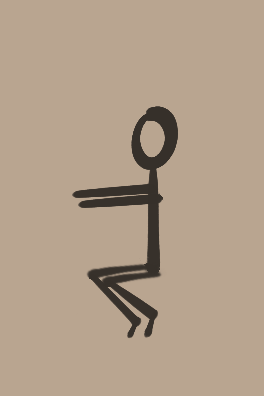
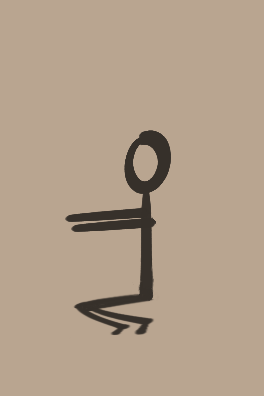
Utkatasana — from the Sanskrit utkata, meaning powerful or fierce — is three distinct postures performed in sequence, each one building on the last. From the outside it may not look dramatic, but for most students it is one of the most physically demanding postures in the standing series. The large muscles of the lower body — quadriceps, hamstrings, calves, glutes, and the stabilizers of the ankle and knee — are loaded isometrically and held, building strength and endurance simultaneously.
The feet are six inches apart, parallel, heels invisible behind the toes, throughout all three parts. The six-inch gap between the feet, knees, and arms is maintained throughout. The arms stay extended forward, parallel to the floor, fingers together, elbows locked — active and engaged for the entire posture.
Part One: the chair
From the starting position the student sits the hips straight back and down — as if lowering into a chair — with 100% of the body weight in the heels, feet flat on the floor throughout. As the hips descend, the chest lifts and the upper body tilts slightly back, the spine making a gentle backbend to counterbalance the hips moving behind the heels. The thighs work toward parallel with the floor.
This position places the primary load on the quadriceps, which must work isometrically against gravity to hold the posture. The flat-footed stance — heels firmly grounded, full sole of the foot in contact with the floor — is what distinguishes this from other squat variations. For many students, the instruction to keep the chest lifted and the spine in a backbend while the hips descend reveals immediately how tight the hip flexors and lower back have become from years of sitting.
The grounded heel position directly addresses poor circulation in the lower legs and feet. The sustained muscular engagement of the quadriceps and the pressure through the full sole of the foot drives fresh blood into the extremities. Students with chronically cold feet, sluggish peripheral circulation, or mild vascular issues in the legs often notice the effect here before anywhere else in the class.
Building this specific pattern of strength — quadriceps, spinal erectors, and abdominals working simultaneously while the spine extends — is among the most effective things a person can do for the health of the lower back. Weakness in these muscles is a primary contributor to lumbar instability and to conditions including slipped and herniated discs. The continuous engagement of the abdominal wall throughout the posture protects the lumbar spine and ensures the backbend occurs in the thoracic rather than the lumbar vertebrae.
Part Two: rising onto the toes
Without changing the feet, the student rises up high on the toes — as high as possible — and from that elevated position sits the hips straight down, again working the thighs toward parallel with the floor. The spine remains straight and upright. The only thing moving is the hips descending. Everything else — arms, spine, the six-inch gap — stays constant.
The height of the rise onto the toes matters significantly. The higher the student comes up, the more the surrounding musculature of the knee supports the joint rather than the joint bearing raw body weight through compression. This is why the instruction is explicit: come up as high as possible. The calves and the intrinsic muscles of the foot work intensely to maintain the elevated position. The inner thigh begins the compression work that intensifies in part three.
For students who have been told to avoid squatting due to knee problems, this instruction is often counterintuitive — but the therapeutic logic is sound. A weak quadriceps is one of the primary contributors to knee pain and instability. Building this strength in a controlled, heat-assisted environment is rehabilitative, not risky, when the alignment is correct.
Part Three: the full descent
Still on the toes, feet six inches apart, the student now presses the knees and thighs together and sits all the way down until the thighs rest on the calves. Spine straight, chest lifted, arms strong and forward, stomach in.
The squeezing of the knees and thighs together through the full descent creates the tourniquet effect — blood flow to the compressed tissues is temporarily restricted, then released in a fresh surge when the posture is exited. This mechanism promotes the circulation of synovial fluid through the knee joint, nourishing the cartilage and helping to reduce inflammation in students with arthritis or chronic joint stiffness.
The exit is as important as the descent. The student rises slowly with knees and thighs pressed together, spine straight, arms engaged — rather than releasing the effort at the bottom and rushing up. The strength built on the way out is as significant as the strength built going in, and it is where much of the therapeutic value for the lower spine is consolidated.
Practiced consistently over time, the full Utkatasana sequence tones and shapes the legs comprehensively, heals chronically cold feet, relieves rheumatism and arthritis in the legs and knees, and helps address problems of the lower spine including slipped discs. It is one of the postures in the series that students most frequently report as the source of their most dramatic long-term physical improvements.
4. Garurasana | Eagle Pose
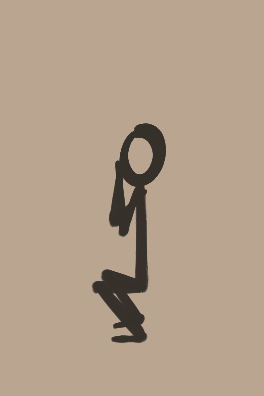
Garurasana — named after Garuda, the mythological eagle-king of Hindu tradition, vahana of Lord Vishnu — is in some ways the most anatomically comprehensive posture in the entire standing series. It wraps the limbs into a configuration that simultaneously compresses and stretches the largest joints in the body while demanding balance, concentration, and a specific kind of muscular surrender that many students find elusive.
Eagle Pose opens all 14 of the largest joints in the skeletal system — ankles, knees, hips, shoulders, scapulae, elbows, and wrists, seven pairs on each side. This is its central claim and its central gift.
Setting up the posture
The right arm swings under the left and the arms wrap at the elbows and wrists, hands working toward the palms pressing together, fingers below the nose. The elbows pull down toward the ribcage while the chest lifts up — creating a counter-tension that compresses the armpit area and deepens the work in the shoulders. The right leg lifts high over the left thigh, then sits down into the posture, the right foot working to wrap around the left calf. All five toes should be visible in the front mirror. The student then works to eliminate any gap between the wrapped ankle and the back of the standing calf, and any gap between the knees.
The alignment is critical: wrists, elbows, knees, and ankles all line up in one vertical line in the mirror. Upper body leans slightly back. Hips sit down more than most students initially expect.
The joints: compression, release, and the tourniquet effect
The wrapping of the arms compresses the shoulder joints, scapulae, elbow joints, and wrist joints simultaneously. The wrapping of the legs does the same for the hip joints, knee joints, and ankle joints. The deep sitting position of the standing leg adds an additional dimension of loading to the knee and hip.
This simultaneous compression of all 14 major joints creates the tourniquet effect. Blood is temporarily restricted from flowing into the compressed tissues. When the posture is released, the restriction lifts and fresh, oxygenated blood floods back into the joints — carrying nutrients, removing metabolic waste products, and promoting the renewal of the synovial fluid that lubricates joint surfaces.
For students with joint stiffness, reduced mobility in the shoulders or hips, or early arthritic changes, this mechanism is one of the most therapeutically valuable in the series. The shoulder joint in particular — prone to impingement, rotator cuff strain, and general stiffness in anyone who works at a desk — receives a deep, multi-directional stretch in the arm wrap that few other postures deliver.
The lymphatic system and immune function
Beyond the joints, the compression mechanics of Eagle Pose have a direct effect on the lymphatic system. The squeezing of the elbows down toward the ribcage compresses the lymph nodes in the armpits. The wrapping and squeezing of the legs compresses the lymph nodes in the inner thighs and groin. When the posture is released, fresh lymphatic fluid flushes through these nodes.
The lymphatic system has no pump of its own — unlike the cardiovascular system, it depends entirely on muscular compression and body movement to circulate. Postures that create deliberate compression and release of the lymph node clusters are among the most effective tools yoga offers for immune support. Students who practice Eagle consistently often report improved resilience during cold and flu season — not a coincidence.
Kidneys, reproductive system, and internal circulation
Fresh blood is directed to the reproductive system through the internal rotation and compression of the hip joints. This increases circulation to the pelvic organs and has been associated in yoga therapeutic traditions with improved reproductive health and relief from reproductive disorders.
The posture also stimulates the kidneys through the twisting compression of the torso and the deep squat position, promoting kidney function and the elimination of metabolic waste.
Balance, concentration, and the nervous system
Eagle Pose is also one of the most demanding balance postures in the standing series. Balancing on one leg while the other is wrapped around it, and simultaneously maintaining the arm configuration, requires the central nervous system to integrate a vast amount of proprioceptive information — signals from the muscles, tendons, joints, and the vestibular system — and translate it into precise, coordinated muscular output.
This kind of balance training has benefits that extend far beyond the yoga room. Single-leg balance work consistently shows improvements in proprioception, neuromuscular coordination, and functional stability — factors that become increasingly important as we age and that are among the strongest predictors of fall risk in older adults.
The sustained focus required to hold Garurasana — gaze fixed on a single point, body held still, breath maintained — develops the capacity for mental stillness under physical challenge. The sharp, observant eye of the eagle is not accidental symbolism.
Preparation for what follows
Eagle Pose also serves a specific preparatory function within the series. The arm wrap creates deep engagement in the deltoids, trapezius, and the muscles between the shoulder blades — directly preparing the shoulders and upper back for Standing Head to Knee and Standing Bow, both of which require sustained shoulder strength and stability. The sequencing of the 26+2 series reflects the systematic intelligence of the Ghosh tradition: each posture not only delivers its own benefits but prepares the body for what comes next.
5. Dandayamana Janushirasana | Standing Head to Knee Pose
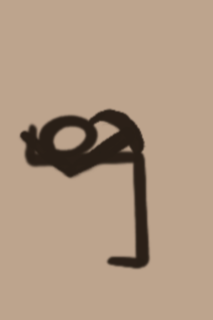
Dandayamana Janushirasana — standing, balancing, knee, head — is the first of the three great balancing postures in the series, and for many students it is the most humbling. It asks for something most people have never developed: the ability to stand on one locked leg, extend the other leg parallel to the floor while gripping the foot with interlocked fingers, and then fold the forehead to the knee. The full expression of the posture takes months or years to develop. And yet the benefits begin from the very first attempt.
The standing leg and the locked knee
The foundation of the posture is the standing leg, and the standing leg must be absolutely locked — knee contracted, quadriceps engaged, the leg a single straight column of support. The dialogue is emphatic about this: you do not have the posture until you have the locked knee. This emphasis is not arbitrary. A bent knee in a single-leg balance transfers stress to the joint rather than the surrounding musculature. A locked knee engages the quadriceps, hamstrings, and gluteal muscles fully, distributing the load correctly and building the kind of deep leg strength that protects the knee over time rather than compromising it.
The sustained single-leg balance also demands constant proprioceptive work from the ankle, the intrinsic muscles of the foot, and the hip stabilizers — the gluteus medius in particular. This is the same neuromuscular system that governs functional stability in everyday life, and the balance work of this posture trains it more completely than almost any conventional exercise.
The lifted leg and the hamstrings
The lifted leg extends forward from the hip, parallel to the floor, heel kicked out, toes flexed back. The grip — ten fingers interlocked three inches below the toes — provides the mechanical leverage for the forward fold but does not do the work of lifting the leg. The leg lifts through its own muscular engagement.
This position creates a sustained, deep stretch through the hamstrings, the sciatic nerve, and the biceps of the thigh. For students with chronically tight hamstrings — the most common flexibility limitation in the series — this posture is one of the most direct tools available. The heat of the room makes the stretch available at a depth that would not be possible in a cooler environment.
As the student folds the upper body down toward the knee, the compression of the abdomen against the thigh massages the digestive organs — the liver, kidneys, spleen, and intestines. This compression-and-release action, combined with the position of the torso, also stimulates the reproductive organs and improves circulation to the pelvic region.
Concentration, determination, and patience
Bikram described Standing Head to Knee as the posture that most directly develops the union of body and mind. The physical demands are significant enough that the mind cannot wander — any lapse in focus and the posture collapses. Students who struggle with anxiety, scattered thinking, or difficulty being present often find that this posture, practiced consistently, produces changes in their mental life that mirror the changes in their body: more stability, more stillness, more capacity to stay with difficulty without fleeing it.
The benefits of the posture — improved circulation, strengthened leg muscles, massaged digestive and reproductive systems, stretched hamstrings and sciatic nerves, and deepened concentration — are available at every stage of its development. You do not need the full expression to receive the full benefit.
6. Dandayamana Dhanurasana | Standing Bow Pulling Pose
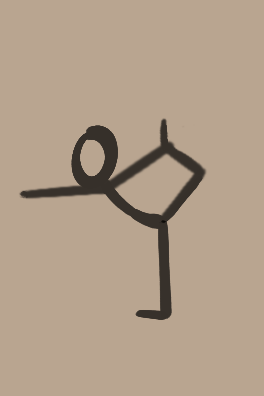
Standing Bow is considered by many teachers and students to be the most beautiful posture in the series. It is also one of the most physiologically sophisticated — a simultaneous backbend, balance, and hip opener that transfers circulation from one side of the body to the other and then equalizes it, making it a perfect example of the tourniquet effect at the whole-body scale.
The setup
The right elbow touches the body, palm facing up — as if asking for money from your mother, as the dialogue puts it. The right ankle is gripped from the inside with all five fingers, palm still facing up. The left arm stretches up, chin close to the shoulder. Both knees come together and the standing leg knee is locked before the posture begins.
From this position, the student charges the body forward toward the mirror — attempting to touch the mirror with the outstretched hand — while simultaneously kicking the right leg back and up toward the ceiling. The forward charge and the backward kick are equally important: without the forward momentum, the posture becomes a passive backbend; without the kick, the body cannot go forward. The two forces create each other.
Circulation: one side, then the other
Standing Bow is the only posture in the series that transfers circulation from one side of the body to the other. As the body leans forward with one arm extended, blood is directed toward the working side — the compressed side of the thorax, the stretched shoulder and arm, the extended standing leg. When the posture is done on the second side, the process reverses. The net effect, across both sets, is that fresh oxygenated blood has been moved into every corner of the torso and the extremities.
This mechanism is particularly beneficial for the heart and lungs. The forward lean with the chest parallel to the floor increases the cardiovascular demand and opens the rib cage, improving the elasticity of the lungs and circulation to the heart muscle itself. Students with respiratory conditions often notice improvement in lung capacity through consistent practice of this posture.
The spine and the lower back
The kick of the back leg creates the backbend — the spine arches from a strong, engaged lower back and the thoracic spine opens. This is not a passive collapse into the lumbar; the standing leg remains locked and the abdominals engaged. The result is a deep, active extension of the entire spine that strengthens the muscles of the lower back and improves spinal flexibility simultaneously.
The posture also firms the abdominal wall, tightens the upper thighs, arms, hips, and buttocks, and improves hip joint flexibility — particularly in the hip flexors of the lifted leg, which are stretched deeply as the leg rises toward the ceiling.
7. Tuladandasana | Balancing Stick Pose
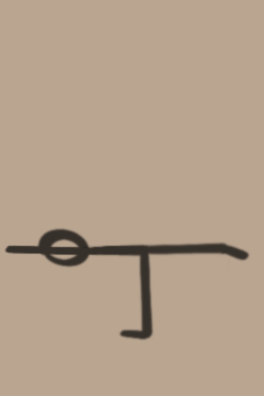
Tuladandasana — from tula (balance) and danda (stick or staff) — is ten seconds long. It is also one of the most demanding postures for the cardiovascular system in the entire series.
The setup
Ten seconds, full body
From standing with arms overhead, fingers interlocked, index fingers released, the student steps forward with one leg and tips the entire body forward until arms, torso, and back leg are all parallel to the floor — forming a perfect T shape. Both knees are locked. The back leg stretches back as powerfully as the arms stretch forward. Everything is in one straight line.
Ten seconds. That is all. But in those ten seconds, the heart rate spikes dramatically. The large muscles of the standing leg, the back, the core, and the extended leg are all firing simultaneously, creating a cardiovascular demand similar to a brief sprint. For the heart and arteries, the effect is significant: blood is pushed through the cardiovascular system with force, reaching the heart muscle itself and clearing blockages from the coronary arteries. Bikram described Balancing Stick as the most important posture in the series for heart health.
The posture also drives fresh blood to the brain through the forward inclined position and the cardiovascular spike. Students with poor concentration or mental fatigue often notice an immediate clearing effect after Balancing Stick — a direct consequence of the sudden surge of oxygenated blood to the cerebral circulation.
The spine as a plank
Holding the entire body perfectly parallel to the floor requires the spinal erectors, the multifidus, and the deep stabilizers of the lumbar spine to work at full capacity. This isometric loading of the posterior chain strengthens the spine in exactly the position that daily life most often compromises — horizontal, extended, under load. The posture also stretches the tendons and muscles of the standing leg intensely, and over time reduces the risk of varicose veins by improving venous return from the lower extremities.
This page will continue to expand as we work through the full 26+2 series. Check back for upcoming additions, and join us for our in-studio posture clinics for a deeper, hands-on exploration of each posture in the series.